Posts

Showing posts with the label Come up with national biodiversity strategies and action plans

Be part of the plan.

Image
  Mark the International Day for Biological Diversity  2024on May 22nd ! The United Nations Biodiversity would like to highlight your celebrations!

Take positive actions to help nature bounce back!

Image
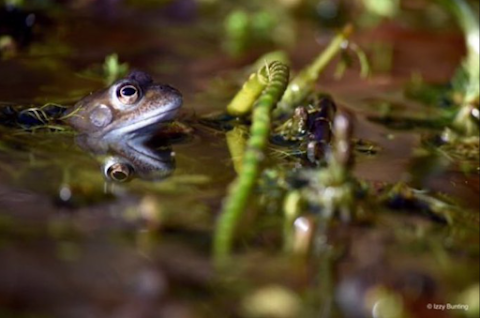
We're losing wildlife; Frogs, butterflies, bumblebees, moths, bats, insects, and birds are all declining But if more of us take positive actions for biodiversity in our gardens, communities, landscapes and towns, we can help nature bounce back. #PartOfThePlan

What does 'biodiversity' mean and why is it important?

Image
  In simple terms, biodiversity refers to all types of life on Earth . The UN Convention on Biological Diversity ( CBD ) describes it as “the diversity within species, between species and of ecosystems, including plants, animals, bacteria, and fungi ”. These three levels work together to create life on Earth, in all its complexity. The diversity of species keep the global ecosystem in balance , providing everything in nature that we, as humans, need to survive, including food, clean water, medicine and shelter.  Over  half of global GDP  is strongly dependent on nature. More than one billion people  rely on forests  for their livelihoods. Biodiversity is also our strongest natural defence against  climate change . Land and ocean ecosystems act as “carbon sinks” , absorbing more than half of all carbon emissions.   Forests are being restored through biodiversity enterprise programmes in Kenya.

What is the Biodiversity Plan?

Image
The Plan, officially called the Kunming-Montreal  Global Biodiversity Framework , is a UN-driven landmark agreement adopted by 196 countries to guide global action on nature through to 2030, which was hashed out at meetings in Kunming, China and Montreal, Canada, in 2022. The aim is to address biodiversity loss , restore ecosystems and protect indigenous rights . Indigenous peoples  suffer disproportionately  from loss of biological diversity and environmental degradation. Their lives, survival, development chances, knowledge, environment and health conditions are threatened by environmental degradation, large scale industrial activities, toxic waste, conflicts and forced migration as well as by land-use and land-cover changes such as deforestation for agriculture and extractives. There are concrete measures to halt and reverse nature loss, including putting 30 per cent of the planet and 30 per cent of degraded ecosystems under protection by 2030 . Currently 17 per cent ...